
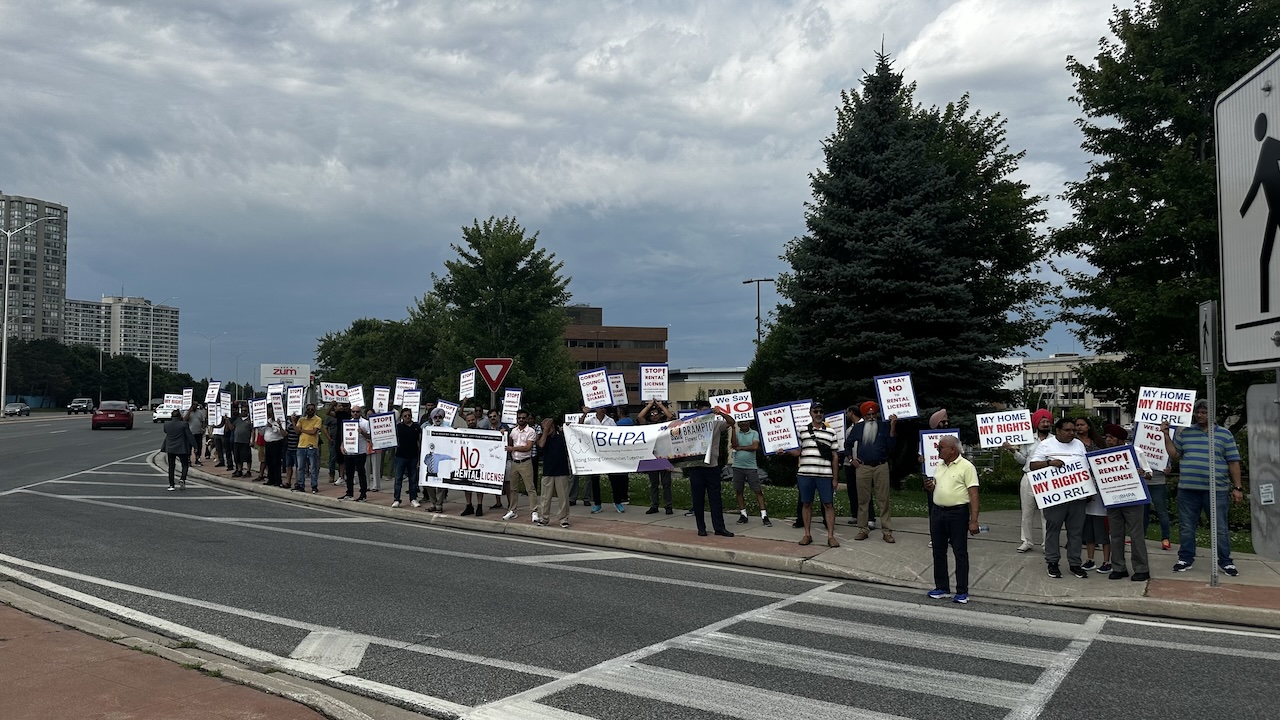
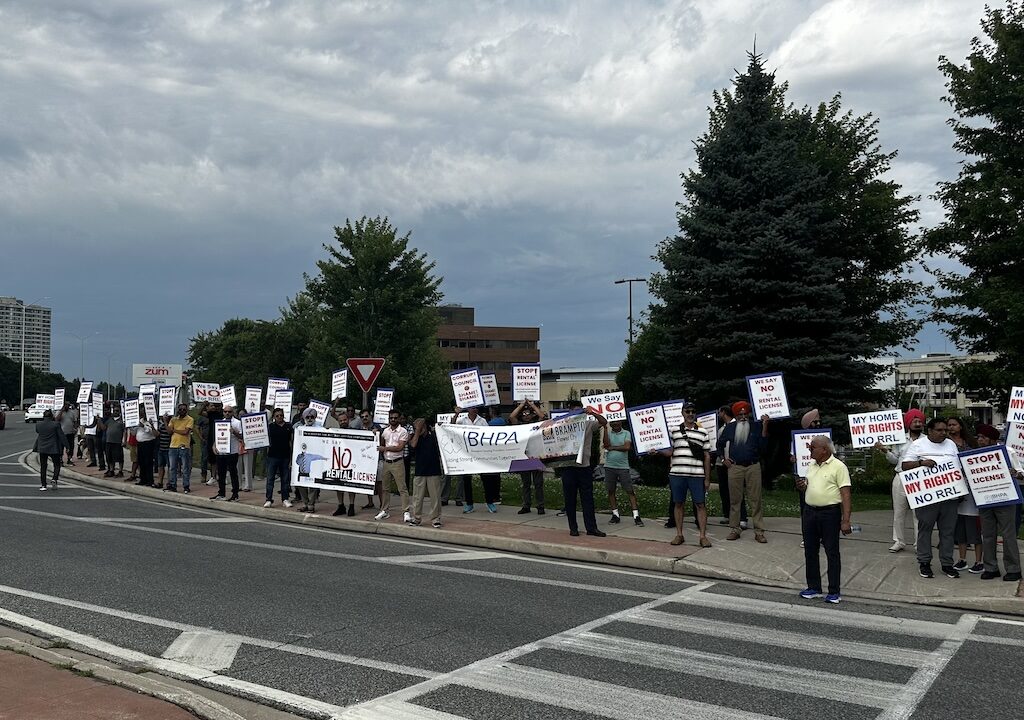
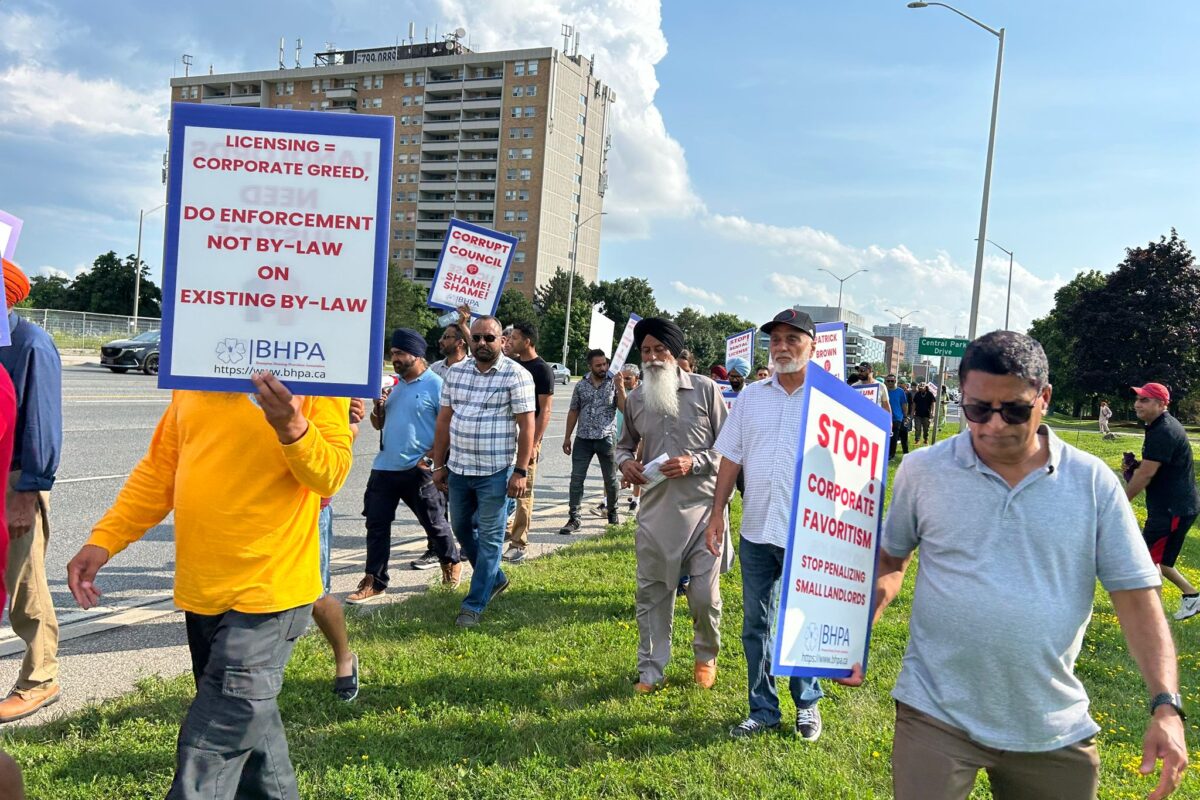
Residents of Brampton geared up for a major protest on July 14th, 2024, opposing the controversial Residential Rental License (RRL) program that has sparked widespread dissatisfaction among landlords and tenants alike. BHPA argue that this initiative targets small landlords unfairly, does not effectively address illegal housing units, and could potentially violate privacy and human rights norms.
The mayor claims that legal unit owners do not need to worry about or pay fees for the license. He mentioned this in a committee of council meeting and in a tele town hall. This is false—RRL requires a $300 yearly fee for maintaining the license.
The city is publishing that City Hall is getting big support from Brampton by showing results for the teletown hall. Has anybody asked what the questions were?
Should the City crack down on illegal Additional Residential Units (ARU)?
This question is not for RRL support, which city hall and fake media are using to show support.
If we like to show RRL support, the question should be,
Do you think or know that RRL is the right solution to crack down on illegal units?
Of course, we all like to improve the city quantity. But Rental Licensing is not the solution.
Since 2007, RRL has been launched many times. In many cities, it has been pushed back and turned down. In cities with a mixed community and white ethnicity, the media has had a different tone.
Brampton, where the Majority of Indian ethnicity and in this time when there is outrage against the Indian community for other issues, city hall is taking advantage. It does not mean what they are doing is right.
If this by-law is really awesome and genuinely in favor of the best interest of the city, the city may not need to spend much taxpayer money on advertisement by paid advertisement.
Despite of first three months fee waiver, only 10-15% of total number of legal basements in these 5 wards. 10% is support for RRL by blind followers not 83%, by asking wrong question.
When politicians do slum politics to make our city Slum. It is unfortunate of Brampton that the city has adopted that these politicians are already either kicked out or disqualified from provincial and federal politics due to unethical practices.
Corruption is deeply seeded in Brampton city hall.
Misleading Information and Lack of Clarity
There is significant concern about misleading information propagated by city officials. The Mayor of Brampton has publicly stated that legal unit owners are exempt from the RRL fee. However, this claim contradicts the reality where every legal unit owner must pay a $300 annual fee to maintain their license. The ambiguity and misinformation extend to the portrayal of community support for the RRL. Feedback from a recent tele town hall was presented in a way that suggested broad support for RRL, but raised questions about the nature and framing of the questions asked during the session.
Questions of Ethnic Bias and Political Motives
The timing and focus of the RRL have also been criticized. Observers point out that previous attempts to introduce similar measures in diverse cities were defeated or scaled back after public opposition. In Brampton, where the majority of residents are of Indian ethnicity, the introduction of RRL at a time of heightened sensitivity to issues impacting this community suggests possible exploitation of the situation by city authorities for political gains.
Concerns Over Targeting and Discrimination
The RRL is perceived by many as unfairly targeting small landlords by exempting larger corporate entities and condominiums. This selective enforcement has raised alarms about potential bias and undue hardship on smaller property owners. Critics also argue that the RRL could discourage new homeowners and landlords, reducing the availability of rental housing and inadvertently driving up rents.
Issues with Privacy and Legal Contradictions
There is a significant backlash regarding the privacy violations entailed in enforcing the RRL. Reported cases of forced inspections and fines imposed for tenant behaviors beyond landlords’ control suggest a discord with Ontario’s Residential Tenancies Act (RTA). Additionally, the setting of arbitrary limits on room sharing and occupancy could infringe upon rights protected under the Ontario Human Rights Code.
Community Response and Legal Action
In response to these issues, community members and legal experts are mobilizing for the upcoming protest and considering legal actions to challenge the RRL. They argue that true support for addressing illegal rental units should involve clear, just, and universally applicable approaches rather than punitive measures targeting compliant landlords.
Looking Ahead
As the date of the protest approaches, organizers are calling for a transparent reassessment of the RRL, urging city officials to consider the broad implications of this policy on the diversity and affordability of housing in Brampton. They stress the need for policies that truly reflect the needs and rights of all community members, fostering an environment of fairness and equality.
The community’s reaction to the upcoming protest and the city’s response may well determine the future landscape of rental housing regulations in Brampton.
RRL is a discriminant by-law against the people of Brampton because more than 80% of the people of Brampton are from South Asia ( Indian, Pakistani, Bangladeshi, Srilankan, Nepali, and Afghani ), and 95 % of them have at least a rental unit ( basement apartment) in their house to afford the cost of very high mortgage. It is a strange thing that more than 80% of the population of Brampton belongs to visible minority people but the job share in the city municipal is hardly 5% for them, this is why this kind of discriminatory bylaws is imposed on only the citizens of Brampton.